
Who was Annie Walker?
I would love | To count each star | To know its place across the heavens
To map their stations and to see | The contours of the dark between
To know each star by name.
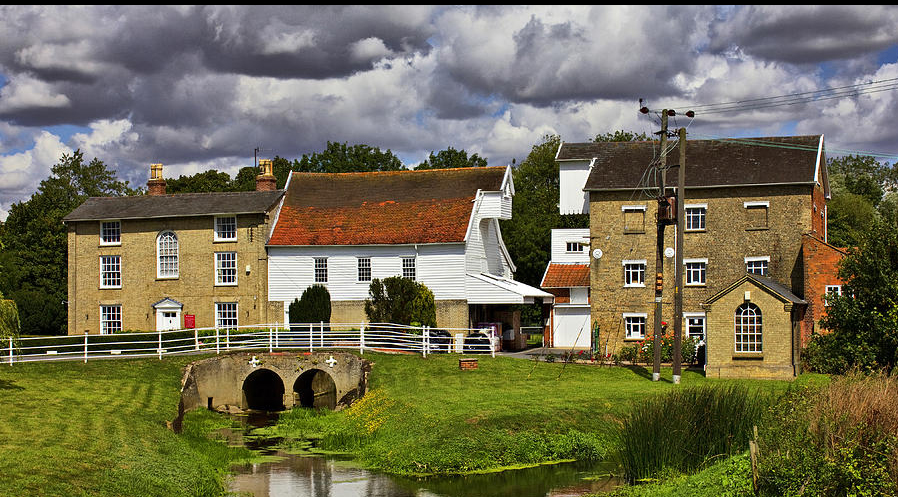
Annie Walker was born in 1863. She spent her early years in Wickham Market, Suffolk, one of four children of master miller and farmer, Ephraim Walker.
From the early 1870s she was boarding at Cavendish House School in Cambridge, where she completed her senior certificate in mathematics.
However, during the 1870s, Ephraim Walker’s financial situation had become increasingly precarious. For Annie to remain at school she needed a source of income.
So, at the age of around 15, Annie first came to the Observatory to work as an assistant computer. Computers were the mathematicians whose calculations supported the work of the observational astronomers, ensuring that the stars’ true positions were recorded.
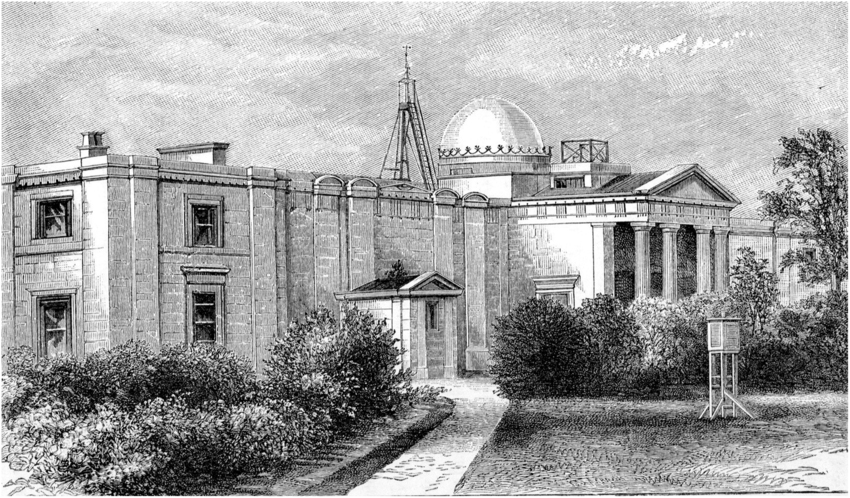
By 1879, Annie was living in the Observatory, working full time. The staff of the astronomy was aging and plagued by ill health. With the support of the director, John Couch Adams, Annie began to take on the role of assistant observer. This was highly unusual: Annie appears to be the first woman observational astronomer since Caroline Hershel.
Under Adams’ wing she flourished, making many thousands of observations, still computing and helping Adams catalogue Newton’s papers for the University Library. She was awarded an annual increment in recognition of the importance of her work to the Observatory, and became the most highly paid woman working in astronomy in Britain.
However, Adams death in 1892 brought disaster for Annie. Not only did she lose her mentor, but the man who replaced him, Robert Ball, had little interest in encouraging and supporting her. A scientific moderniser, much concerned with building the reputation of the Observatory, he stopped Annie’s increment and brought in younger, more highly paid men over her head.
Annie attempted to hold on to her de facto post as Assistant Astronomer, writing to Ball:
I am desirous to contribute to astronomical work
Ball ignored her. She hung on till 1903 assisting Andrew Graham and left the Observatory on the day Graham retired.
Annie’s family had emigrated to Australia in 1885 and she now chose to join them. Although she continued to describe herself as “Astronomer” in census documents till 1909, she appears to have never worked in astronomy again. She died, unknown and forgotten, in Melbourne in 1940. Even the younger generations of her own family, had no idea that she had ever worked in astronomy.
 Hidden Star - The Story of Annie Walker